Anthology or Continuing Cast: Two Shapes for a Series
Anthology or continuing cast: compare how each series shape handles fresh premises, character change, and audience attachment to choose the right story engine.
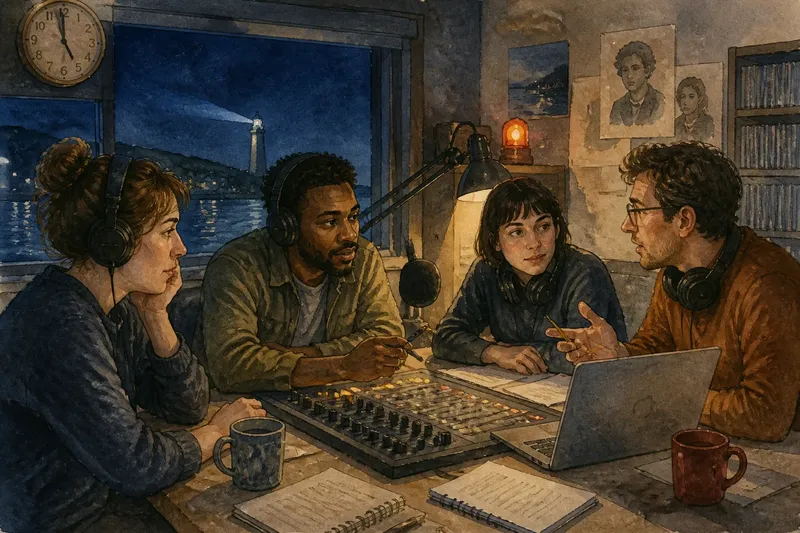
Anthology or continuing cast is not just a choice between new faces and familiar ones; it determines what each episode asks viewers to remember. Imagine a small writing team planning a screen series around a coastal radio station. Its first idea follows the same overnight crew through a season; its second makes each episode a separate story sparked by a broadcast. The choice depends on whether the richest material lies in the station’s changing crew or in the different lives touched by its signal.
What does each series shape promise?
An anthology gives each episode, or sometimes each season, room for a new cast, conflict, and resolution. A connecting idea—a place, a theme, a genre, or a recurring object—can make separate stories feel like parts of one work. Viewers can enter with little preparation because the next installment does not depend on remembering every earlier character turn.
A continuing-cast series returns to a core group whose relationships and circumstances shift over time. An episode may resolve its immediate problem while leaving a friendship strained, a secret exposed, or a character’s priorities altered. The reward builds through accumulation: a later choice carries weight because viewers have seen what came before.
Neither form automatically creates depth or variety. Ask instead which story engine can produce meaningful episodes without making the premise feel exhausted.
What does the radio-station idea become?
In the continuing-cast version, the night crew forms the engine. A new caller, equipment problem, or difficult broadcast supplies immediate pressure, while the crew’s response changes how they work together. One person may become more willing to share responsibility; another may retreat after a disagreement. The station remains the setting, but its emotional landscape keeps moving.
That continuity gives the writers a store of consequences. If a host breaks a promise, a later scene can show trust thinning rather than explain the breach again. The trade-off is that episodes depend more heavily on sequence: a viewer who misses a key relationship shift may feel lost, and a plot that resets the crew to its old habits can make the series seem to forget its own events.
In the anthology version, the station is a doorway rather than the main character. One episode might follow a caller, another a technician, and another someone listening at home, with the broadcast connecting otherwise separate lives. A quiet story can sit beside a comic or unsettling one if both belong to the series’ central idea of voices reaching across distance.
This flexibility can keep the premise fresh and let each installment complete its own dramatic arc. But the team still needs a reason for these stories to sit together. If the radio connection is only decorative, the series may feel like unrelated short films sharing a logo. A recurring sound, choice, or thematic question can provide cohesion without forcing every episode into the same mold.
How can you tell which format fits the story engine?
Imagine the team reviews its notebook and finds three ideas about the crew’s private history: a new host’s unease, a manager’s changing relationship with a sibling, and the gradual redistribution of authority. Because each idea gains force from change over time, continuing characters suit this material.
The notebook also holds three stories about people who may never return: a caller trying to deliver an apology, a listener misreading a late-night announcement, and a technician who hears something that alters a routine journey home. These can stand alone, with the station as their shared hinge. If they are the strongest material, an anthology gives them space without requiring artificial reunions.
In this invented situation, the team chooses a continuing cast but initially writes every episode as if it must introduce the station from scratch. It lists the crew’s current relationships and decisions, then revises each opening to establish only the information needed for that episode. The expected result is less repeated setup and more room for fresh conflict, while the crew’s history remains legible through what they do.
To weigh the choice yourself, use these checks. For each item, note what is true of your story and follow the decision that fits.
- Where does the strongest change happen? Check whether the main character change belongs to a recurring group or a new protagonist in each premise. If it belongs to a recurring group, favor continuing characters; if it belongs to a different protagonist each time, favor an anthology.
- What must viewers remember? Check whether later scenes rely on earlier relationship shifts or can introduce their own characters and conflict. If accumulated memory makes later choices richer, favor continuity; if each story is understandable on its own, favor an anthology.
- What makes the setting matter? Check whether the place shapes a group’s daily life or connects otherwise separate people to one idea. If it shapes shared routines and relationships, favor a continuing cast; if it mainly links distinct stories, favor an anthology.
- Can the premise produce different conflicts? Check whether recurring characters can face new pressures or whether fresh protagonists reveal the premise’s range. If the same group keeps uncovering new facets, favor continuity; if new lives create the needed variety, favor an anthology.
- What kind of ending fits? Check whether the story needs character consequences to keep moving or each installment to complete its own arc. If unresolved character change is part of the appeal, favor a continuing cast; if a fresh resolution better serves each story, favor an anthology.
- Does the shared thread still matter? Check whether a recurring setting, sound, or theme connects the material beyond branding. If the thread gives distinct stories a meaningful bond, an anthology remains viable; if it matters mainly because the same people return, favor a continuing cast.
How can either format stay cohesive without feeling repetitive?
For a continuing cast, cohesion comes partly from relationships, so repetition appears when characters face the same conflict without a changed understanding of it. Track what each person knows, wants, and avoids, then ask what the episode leaves different. A small shift in who asks for help can matter if it alters the group’s pattern.
For an anthology, cohesion needs a deliberate thread that survives cast changes. It might be a consistent point of view, a recognizable soundscape, or a recurring question about who gets heard. The thread should help viewers recognize the series, not dictate that every story reach the same moral or emotional ending.
In the invented radio series, the team keeps the overnight signal as its shared motif in either format. With a continuing cast, the changing broadcast echoes the crew’s evolving relationships. With an anthology, the same signal connects separate stories while letting each end on its own terms.
What else should you know about these series formats?
Can an anthology have recurring characters?
Yes. An anthology can return to a character, setting, or group without making every episode depend on continuous character development. The distinction is whether each installment stands as a fresh story or relies on the accumulating history of a continuing cast.
Can a continuing-cast series tell a self-contained episode?
Yes. It can give an episode its own central problem and resolution while allowing characters to carry consequences forward. A self-contained plot and ongoing character change can work together.
Which format is easier for a new viewer to enter?
An anthology often offers a simpler starting point because a new story can introduce its own people and conflict. A continuing-cast series can also welcome newcomers, but it needs to make current relationships clear without pausing for a full recap.
Can a series change from one shape to the other?
It can, though the shift changes audience expectations. A move toward anthology storytelling needs a clear organizing idea; a move toward continuity needs recurring characters whose connections can sustain meaningful change.
For anyone weighing anthology or continuing cast, name what viewers should notice changing from one episode to the next. If the answer is the people, continuity may be the engine; if it is the meaning of a recurring premise, fresh starts may be the point. A series can also combine a stable cast with self-contained plots, as long as its episodes know which changes they want viewers to carry forward.